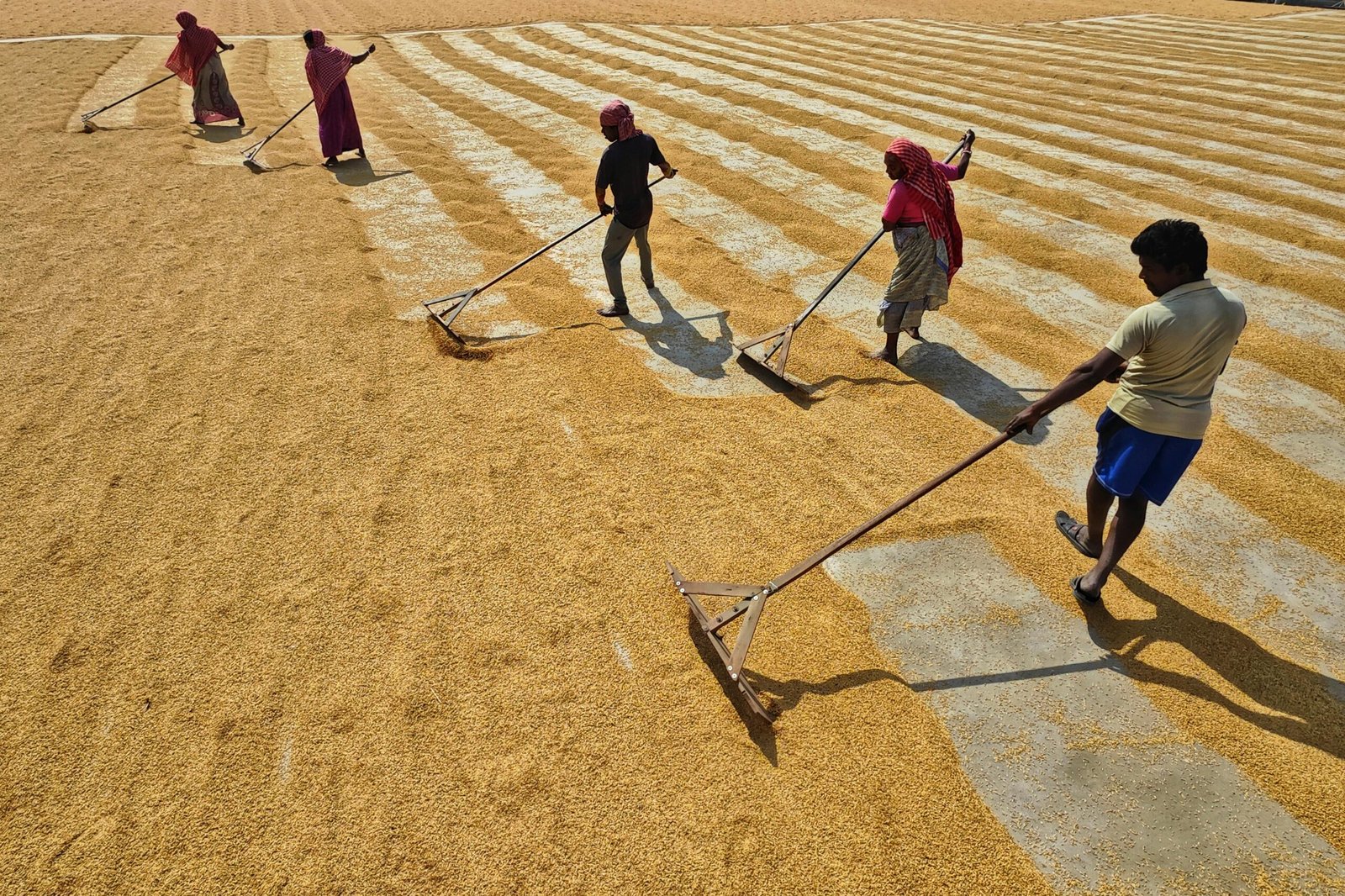
Indian Agriculture: Structure, Transformation and Contemporary Challenges
5 minutes read time
Introduction
Indian agriculture remains central to the country’s socio-economic framework, shaping rural livelihoods, national food security, and macroeconomic stability. As one of the largest producers of food grains, fruits, vegetables, milk, and spices, India occupies a significant position in the global agricultural system. Despite rapid industrialization and expansion of the service sector, agriculture continues to employ a substantial share of the workforce and contributes meaningfully to the national income. The evolution of the agricultural economy of India reflects a transition from subsistence-based farming to diversified, market-oriented production systems. However, persistent structural constraints—such as small landholdings, climate variability, and price instability—pose ongoing challenges. This academic discussion analyzes the development, economic contribution, policy framework, and sustainability concerns of Indian agriculture, supported by authoritative sources.
Historical Transformation of Indian Agriculture
Pre-Independence Context
Before 1947, agricultural practices in India were largely traditional and monsoon-dependent. Limited irrigation, low-input farming, and colonial land revenue systems restricted productivity growth. Food shortages and periodic famines were common due to inadequate infrastructure and low technological adoption.
The Green Revolution and Productivity Expansion
A decisive shift occurred during the 1960s with the introduction of the Green Revolution. The adoption of high-yielding variety (HYV) seeds, expansion of irrigation networks, chemical fertilizers, and improved credit systems significantly enhanced wheat and rice production. According to the Food and Agriculture Organization (FAO, 2023), India’s food grain production increased substantially in the decades following these reforms, enabling the country to achieve near self-sufficiency in staple crops.
While the Green Revolution improved aggregate output, scholars note that its benefits were regionally concentrated, particularly in Punjab, Haryana, and western Uttar Pradesh, leading to inter-regional disparities (Government of India, 2022).
Post-1991 Liberalization and Diversification
Economic liberalization in 1991 further integrated Indian agriculture with global markets. Reforms encouraged private investment, agro-processing industries, and export-oriented production. The sector diversified into horticulture, dairy, poultry, and fisheries, reducing sole dependence on food grains (NITI Aayog, 2021).
Economic Significance of Indian Agriculture
Contribution to GDP and Employment
Agriculture contributes approximately 15–18% to India’s Gross Domestic Product (GDP), while employing nearly 45% of the workforce (World Bank, 2023). Although the relative share of agriculture in GDP has declined over time, its employment share remains high, indicating structural transformation challenges.
The World Bank (2023) highlights that agriculture continues to be a primary income source for rural households, particularly in less industrialized states.
Food Security and Nutritional Role
India’s agricultural system ensures food supply for over 1.4 billion people. Public procurement and distribution mechanisms, including the Public Distribution System (PDS), support food accessibility. The promotion of climate-resilient crops such as millets gained global recognition during the International Year of Millets, emphasizing sustainable dietary transitions.
Export Performance
India ranks among the top exporters of rice, spices, tea, and cotton. Agricultural exports contribute significantly to foreign exchange earnings, strengthening trade balances (Reserve Bank of India, 2023).
Institutional Framework and Policy Initiatives
Agricultural governance in India is administered by the Ministry of Agriculture & Farmers Welfare. Over the past decade, several farmer-centric schemes have been introduced:
- Pradhan Mantri Kisan Samman Nidhi (PM-KISAN): Direct income support to small and marginal farmers.
- Pradhan Mantri Fasal Bima Yojana (PMFBY): Crop insurance to mitigate risk from natural calamities.
- Soil Health Card Scheme: Promotes balanced fertilizer use and sustainable soil management.
- National Agriculture Market (e-NAM): Facilitates digital trading of agricultural commodities.
Policy reforms aim to improve market efficiency, reduce intermediaries, and enhance farmer income stability (Government of India, 2023).
Structural and Environmental Challenges
Despite progress, Indian agriculture faces persistent challenges:
1. Fragmented Landholdings
Over 85% of farmers operate on small and marginal holdings (Agricultural Census, Government of India, 2021). Fragmentation limits mechanization and economies of scale.
2. Climate Change and Resource Degradation
Erratic monsoon patterns, rising temperatures, and groundwater depletion threaten long-term productivity. Intensive input use during the Green Revolution has also led to soil degradation in certain regions (FAO, 2023).
3. Income Instability
Price volatility and inadequate market access contribute to fluctuating farmer incomes. Structural inefficiencies in supply chains further exacerbate income uncertainty.
Sustainable Agriculture and Future Prospects
The future of Indian agriculture increasingly depends on sustainability and technological integration. Precision farming, drip irrigation, organic agriculture, and climate-resilient crop varieties are gaining attention. Digital platforms, satellite monitoring, and agri-tech startups are transforming input management and market linkages.
NITI Aayog (2021) emphasizes the need for crop diversification, investment in rural infrastructure, and improved value chains to ensure long-term agricultural resilience. Strengthening Farmer Producer Organizations (FPOs) may enhance collective bargaining power and reduce transaction costs.
Conclusion
Indian agriculture has undergone significant transformation, transitioning from traditional subsistence farming to a more diversified and market-oriented system. The Green Revolution played a foundational role in ensuring food self-sufficiency, while post-liberalization reforms fostered diversification and globalization. Nonetheless, structural constraints, climate risks, and income instability continue to challenge the sector. Sustainable practices, institutional reforms, and technological innovations will be critical in shaping the future trajectory of Indian agriculture. Ensuring inclusive growth in the agricultural economy remains essential for India’s broader developmental goals.
References
- Food and Agriculture Organization. India country profile. 2023. Available from: https://www.fao.org/india
- Government of India. Agricultural Census 2015–16. Ministry of Agriculture & Farmers Welfare; 2021.
- Government of India. Agricultural Statistics at a Glance. Ministry of Agriculture & Farmers Welfare; 2022.
- Government of India. Annual Report 2022–23. Ministry of Agriculture & Farmers Welfare; 2023.
- NITI Aayog. Strategy for New India @75: Agriculture Sector Reforms. 2021. Available from: https://www.niti.gov.in
- Reserve Bank of India. Handbook of Statistics on the Indian Economy. 2023. Available from: https://www.rbi.org.in
- World Bank. World Development Indicators: Agriculture Value Added (% of GDP) – India. 2023. Available from: https://data.worldbank.org