Japan: Country Profile and Government Structure
Introduction
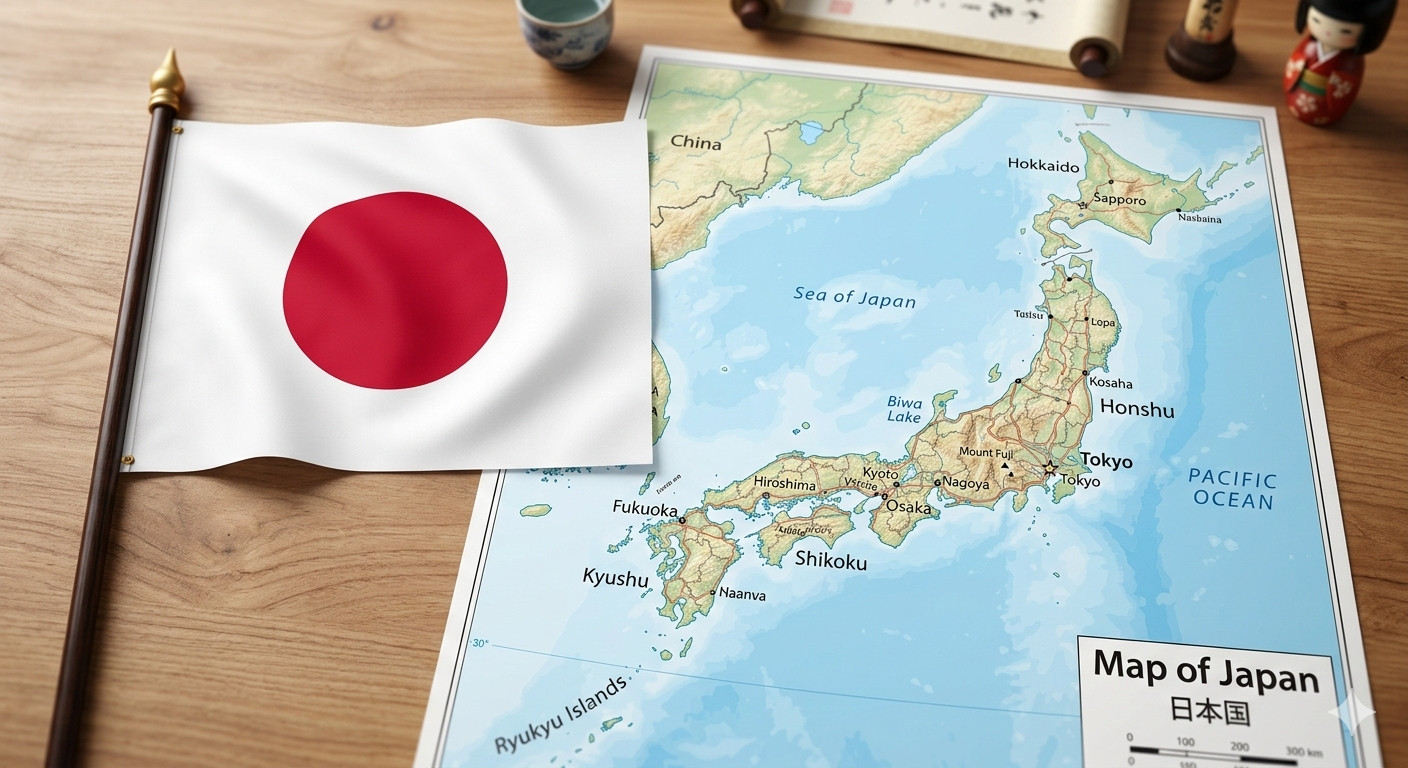
Japan is an island nation located in East Asia, situated in the Pacific Ocean east of the Korean Peninsula and China. Comprising four main islands Honshu, Hokkaido, Kyushu, and Shikoku along with thousands of smaller islands, Japan is known for its advanced economy, technological innovation, and rich cultural heritage.
Japan operates as a constitutional monarchy with a parliamentary government. Its post-war political system is based on the Constitution of Japan, which came into effect on 3 May 1947 and established democratic governance, pacifism, and the rule of law.
Geography and Demographics
Japan covers approximately 377,975 square kilometers. The capital city, Tokyo, is one of the world’s largest metropolitan areas and serves as the political, economic, and cultural center of the country.
Japan has a population of over 120 million people. The official language is Japanese, and Shintoism and Buddhism are the major traditional religions. Japan is known for its high life expectancy, advanced healthcare system, and aging population demographic trends.
Historical Background
Japan has a long imperial history traditionally traced back to 660 BCE. In the late 19th century, the Meiji Restoration transformed Japan into a modern industrial state.
Following World War II, Japan adopted a new constitution under Allied occupation. The 1947 Constitution introduced parliamentary democracy and renounced war under Article 9, shaping Japan’s post-war identity as a pacifist nation.
Political System and Government Structure
Japan is a constitutional monarchy with a parliamentary system of government.
The Emperor
The head of state is the Emperor, currently Naruhito. Under the Constitution of Japan, the Emperor serves as a symbolic figure of the state and the unity of the people. The role is ceremonial, with no governing powers.
The Executive Branch
Executive authority is vested in the Cabinet, headed by the Prime Minister. The Prime Minister is designated by the National Diet and formally appointed by the Emperor. The Prime Minister leads government policy, directs the Cabinet, and represents Japan in international affairs.
The current Prime Minister (as of 2026) is Fumio Kishida, who heads the executive administration.
The Legislative Branch
Japan’s legislature is the National Diet, a bicameral body consisting of:
- The House of Representatives (lower house)
- The House of Councillors (upper house)
The Diet is the highest organ of state power and is responsible for passing laws, approving the budget, and selecting the Prime Minister.
The Judiciary
The judiciary operates independently under the Constitution. The highest judicial authority is the Supreme Court of Japan, which has the power of judicial review. The court system includes High Courts, District Courts, Family Courts, and Summary Courts.
Economy
Japan has the world’s third-largest economy by nominal GDP. It is a global leader in technology, automobile manufacturing, robotics, and electronics. Major corporations such as Toyota, Sony, and Mitsubishi play significant roles in global markets.
Japan is a member of major international economic organizations, including the World Trade Organization (WTO) and the Group of Seven (G7). Despite strong industrial output, Japan faces challenges such as public debt and demographic aging.
Foreign Policy and Defense
Japan maintains a pacifist stance under Article 9 of its Constitution, renouncing war as a sovereign right. However, it maintains Self-Defense Forces for national security. Japan has a security alliance with the United States and plays an active role in regional diplomacy in East Asia.
Social Development and Infrastructure
Japan has a highly developed infrastructure network, including advanced transportation systems such as the Shinkansen (bullet train). It maintains universal healthcare coverage and a high literacy rate. Innovation, disaster preparedness, and technological advancement are central to public policy.
Conclusion
Japan represents a modern constitutional monarchy grounded in democratic governance and pacifist principles. Since adopting its 1947 Constitution, the country has developed into a major global economic power while maintaining strong institutional stability. Its governance structure—combining a symbolic emperor with an elected parliamentary system—continues to shape Japan’s political and international role in the 21st century.
References
- Government of Japan. (n.d.). Japan Government Portal.
https://www.japan.go.jp - Constitution of Japan. (1947). Government of Japan.
- National Diet of Japan. (n.d.). About the Diet.
https://www.shugiin.go.jp - World Bank. (2023). Japan Overview.
https://www.worldbank.org/en/country/japan - World Trade Organization (WTO). (n.d.). Japan Member Profile.
https://www.wto.org
Last updated on 04 March 2026 at 12:42 AM.