Iran: Country Profile and Government Structure
Introduction
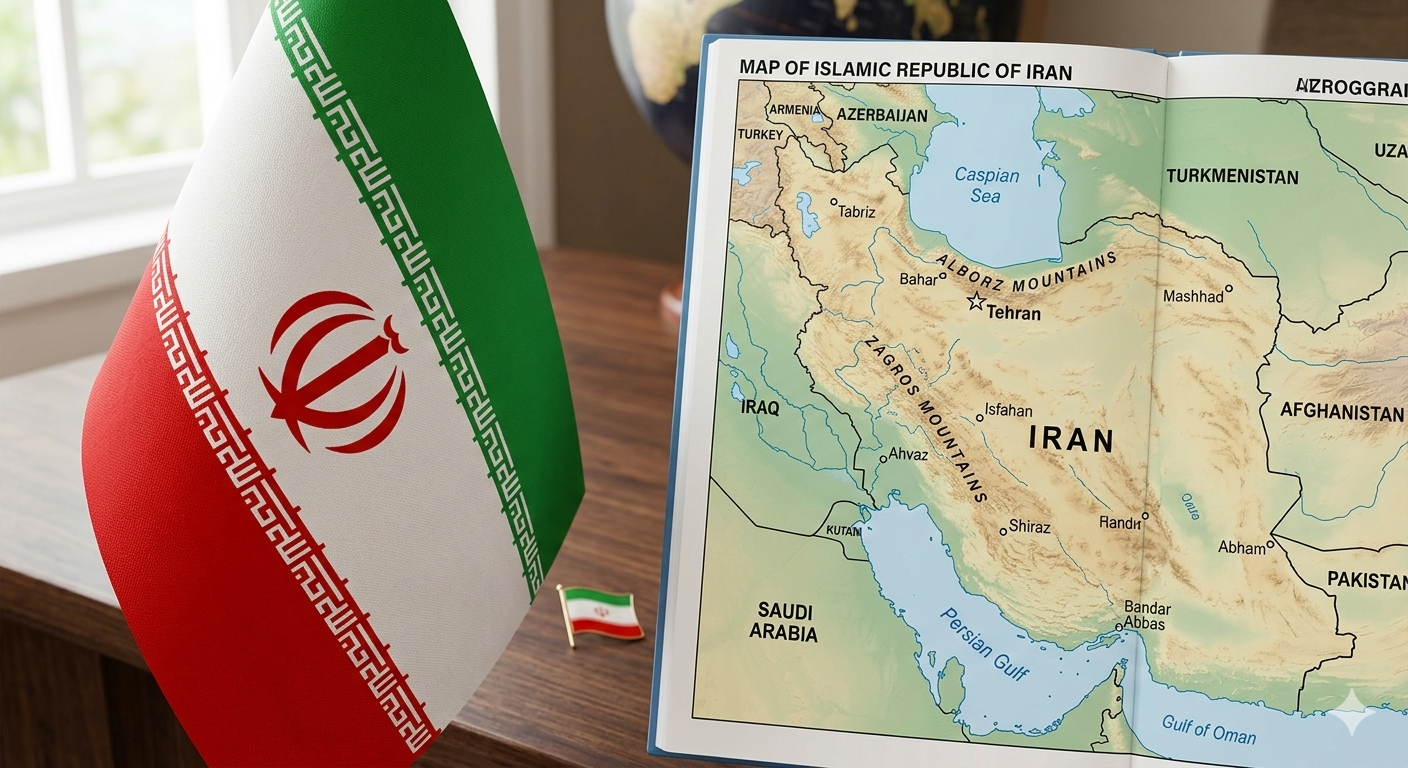
The Iran, officially known as the Islamic Republic of Iran, is a country located in Western Asia with significant historical, cultural, and geopolitical importance. Bordered by Iraq, Turkey, Afghanistan, Pakistan, Armenia, Azerbaijan, and Turkmenistan, and with coastlines along the Caspian Sea and the Persian Gulf, Iran occupies a strategic location connecting the Middle East, Central Asia, and South Asia. Since the adoption of the Constitution of the Islamic Republic of Iran following the 1979 Revolution, Iran has operated under a unique political system that blends elements of republican governance with Islamic theocratic oversight.
Historical Background
Modern Iran emerged from a long imperial history that includes the Achaemenid, Parthian, and Sassanian empires. In the 20th century, the country was ruled by the Pahlavi monarchy until the Iranian Revolution led to the overthrow of Shah Mohammad Reza Pahlavi. The revolution resulted in the establishment of an Islamic Republic under the leadership of Ayatollah Ruhollah Khomeini. A national referendum in 1979 approved the creation of the new political system, which redefined Iran’s constitutional structure and governance framework.
Constitutional Framework and Government Structure
Iran’s political system is defined by the 1979 Constitution, which establishes a hybrid structure combining elected institutions with clerical authority. The highest authority in the country is the Supreme Leader, currently Ali Khamenei, who holds ultimate control over the armed forces, judiciary, state broadcasting, and major policy decisions. The Supreme Leader is appointed by the Assembly of Experts, an elected clerical body responsible for supervising and selecting the leader.
The President of Iran, currently Ebrahim Raisi (as of recent official records), serves as the head of government and is elected by popular vote for a four-year term, renewable once consecutively. The President oversees the executive branch, implements domestic policies, manages economic planning, and represents the country in international diplomacy. However, presidential authority operates within the broader framework set by the Supreme Leader.
The legislative branch consists of the Islamic Consultative Assembly (Majlis), a 290-member parliament elected by the public. The Majlis drafts legislation, approves budgets, and ratifies international treaties. All laws passed by parliament must be reviewed by the Guardian Council, a 12-member body composed of Islamic jurists and legal experts, which ensures compatibility with both Islamic law (Sharia) and the Constitution. The Guardian Council also supervises elections and approves candidates for major public offices.
The judiciary operates independently but is influenced by Islamic legal principles. The head of the judiciary is appointed by the Supreme Leader and oversees courts responsible for civil, criminal, and administrative matters. Iran’s legal system incorporates both civil law traditions and Sharia-based jurisprudence.
Administrative Divisions and Local Governance
Iran is divided into 31 provinces, each governed by a governor appointed by the Ministry of Interior. Local councils, elected by residents, manage municipal affairs in cities and villages. Tehran, the capital city, serves as the political, economic, and administrative center of the country.
Economy and Natural Resources
Iran possesses some of the world’s largest proven reserves of oil and natural gas, making energy exports a central component of its economy. The country is a member of the Organization of the Petroleum Exporting Countries (OPEC). Beyond hydrocarbons, Iran has diversified sectors including agriculture, automotive manufacturing, mining, and petrochemicals. However, international sanctions, inflation, and currency volatility have posed economic challenges in recent decades. Government planning is guided by national development programs that aim to reduce oil dependency and expand domestic production.
Foreign Policy and Strategic Importance
Iran holds considerable geopolitical influence due to its strategic location near the Strait of Hormuz, through which a significant portion of global oil trade passes. Its foreign policy reflects a combination of regional engagement, strategic alliances, and opposition to perceived external interference. Iran maintains diplomatic relations with numerous countries and plays an active role in regional affairs, particularly in the Middle East.
Society, Religion, and Culture
The majority of Iran’s population adheres to Twelver Shi’a Islam, which serves as the state religion. Religious minorities, including Sunni Muslims, Christians, Jews, and Zoroastrians, are constitutionally recognized and granted limited parliamentary representation. Persian (Farsi) is the official language, and Iran’s cultural heritage includes renowned contributions to literature, philosophy, architecture, and science. Cities such as Isfahan, Shiraz, and Mashhad are notable for their historical and religious significance.
Conclusion
The Islamic Republic of Iran represents a distinctive model of governance that integrates republican institutions with Islamic clerical authority. Since 1979, the country has maintained a constitutional system in which elected bodies function alongside religious oversight institutions. While facing economic pressures and complex regional dynamics, Iran remains an influential state in Middle Eastern politics and global energy markets. Understanding Iran’s constitutional structure, political institutions, and historical evolution provides essential insight into its domestic governance and international role.
References
- Constitution of the Islamic Republic of Iran (1979). Government of Iran Official Text.
- Encyclopaedia Britannica. Iran: Government and Politics. https://www.britannica.com/place/Iran
- United Nations Data. Country Profile: Iran. https://data.un.org
Last updated on 03 March 2026 at 7:22 PM.